
Since I started in photography, I have watched this profession change radically over time. From film cameras to the digital world, every stage has brought new challenges and tools. But nothing has impacted me as much as the arrival of artificial intelligence. In this article I want to share my personal view on the pros and cons AI brings to our profession, from the technical, artistic, commercial and ethical sides. This is not just a trend: it is a deep change that forces us to rethink what it means to be a photographer today.
AI: ALLY OR THREAT
Artificial intelligence has deeply transformed the world of photography. From my experience as a photographer, I have seen how these tools can speed up technical tasks like editing, sorting or generating images, allowing me to focus on the creative side. AI has pleasantly surprised me with its precision in portrait retouching, workflow automation and its ability to help emerging photographers with limited resources. In areas like product, scientific or medical photography, it has also proven to be a valuable ally thanks to its efficiency and accuracy. Creativity has expanded through blends of photography and digital illustration, and new visual forms have been born from the collaboration between the human mind and the algorithm. I have even seen how conceptual art projects can be driven forward with the help of AI, which works as a tireless creative assistant. In my case, I use artificial intelligence not only to improve technical aspects, but also to correct mistakes, add objects that complement the scene and improve the overall visual impact of the image, without losing the soul of the original photograph. It has also helped me elevate the visual concept of my work, strengthening detail and enhancing the story I want to tell.
Personally, I have explored text-to-image generation tools, advanced automatic editing and composition analysis. Although none of them replaces the intuition and sensitivity of the human eye, they do offer an important competitive advantage. In commercial sessions, for example, I can show clients edited versions almost in real time, which improves their experience and saves time. It has also helped me find new inspiration: playing with impossible styles, imagining scenes I haven’t been able to photograph yet, or visually rebuilding complex concepts that used to be hard to explain. It has even allowed me to rescue photos I would have thrown away before, giving them new life with smart, assisted editing. In editorial and artistic projects, AI gives me a second look, almost like having a virtual colleague who suggests ideas, colors, compositions or visual storytelling structures. Many times, what starts as a simple idea ends up evolving into something deeper thanks to these tools. And that chance to grow conceptually with the help of technology, without compromising my personal style, is one of the reasons I see AI as a resource that is here to stay.
However, this technological revolution also brings important risks and dilemmas. The flood of AI-generated images has hurt the value of traditional photographic work. Clients who once recognized the art behind a good photograph now hesitate to pay for it. On top of that, authorship becomes blurry: who owns the works created by AI? Using artists’ images without their consent to train models raises serious ethical and legal concerns. As a documentary photographer, I am also worried about AI’s impact on visual truth. We live in a time when an image can be completely fake yet look more real than reality itself, which has serious consequences in the age of misinformation. Add to that the constant pressure to produce faster, cheaper and with more spectacular results, which can damage the integrity of our craft. I also worry that, little by little, we will lose appreciation for handcrafted work, for the trained eye, and for the emotional connection between the photographer and the subject. AI can do incredible things, but it still doesn’t know how to see with empathy.
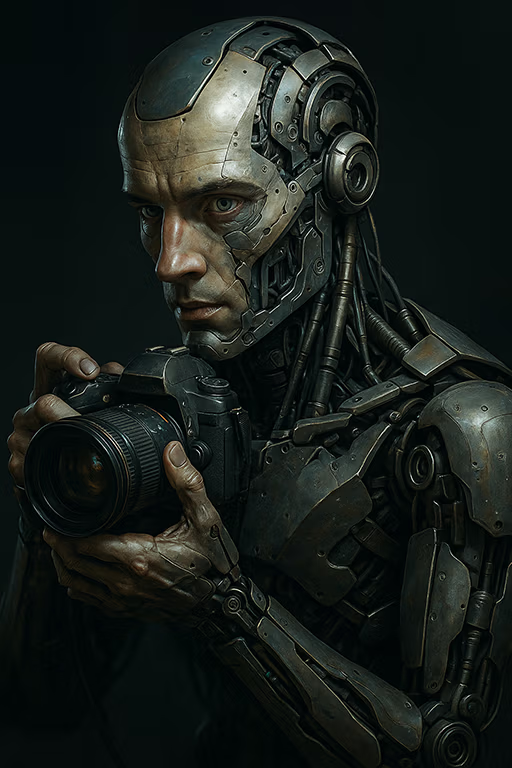
Despite the challenges, I firmly believe photographers must lead this new chapter. AI does not replace our vision; it only gives us new tools to express it. This transition requires us to adapt, to gain new technical, ethical and legal knowledge, and to keep alive our passion for telling stories through light. Being a photographer today means much more than knowing how to use a camera: it means understanding technology, protecting our authorship and continuing to create with intention. Artificial intelligence is not the end of photographic art; it is an opportunity to rediscover it from a more conscious, creative and powerful perspective. If we learn to master it instead of fearing it, we can preserve what matters most in this profession: our voice, our sensitivity and our ability to move people with an image. Technological change should not scare us; it should push us to be more curious, more critical and more authentic. Because in the end, beyond the tool, what connects with the viewer is always the human eye behind every photograph.
Share this article:
I’d love to hear your opinion. Leave your comment below
Tell us about your thoughtsWrite message